
Blogs
The Impact of the Conflict in Syria – Lives, Futures, and a Nation Rewritten

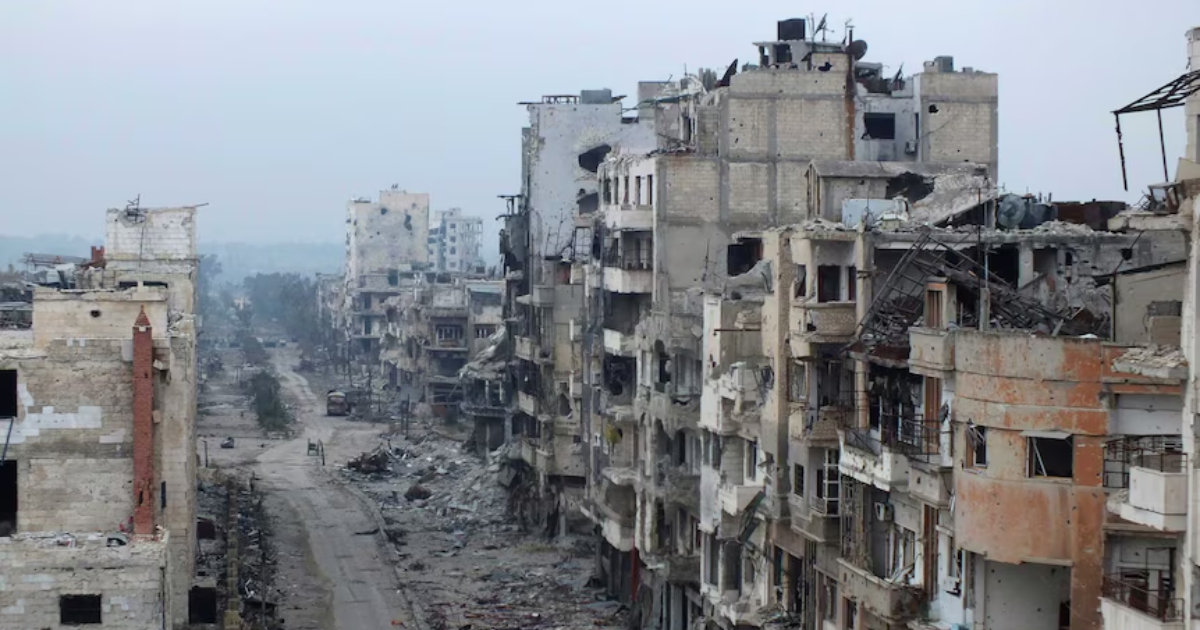
When people speak about the impact of the conflict in Syria, they often speak in numbers: the millions displaced, the children out of school, the percentage of infrastructure destroyed. But numbers alone cannot carry the weight of what happened. They cannot describe the silence in a home once filled with laughter, the emptiness of a street that no longer echoes with familiar footsteps, or the way memory becomes a battlefield long after the guns fall quiet.
For Syrians, the conflict was not an event. It was a fracture, one that split time into “before,” “during,” and “after,” each era shaping a different kind of loss and a different kind of resilience. What survives today is not simply a nation altered, but a people reshaped by pain, endurance, and the stubborn belief that dignity must be reclaimed, no matter how long it takes.
A War That Rewrote Daily Life
The most devastating aspect of the impact of the conflict in Syria is how it dismantled ordinary life. Before 2011, families planned futures, not escape routes. Schools were full, shops were open, and communities argued about mundane matters, rent prices, local gossip, and football matches.
Then everything changed. What Syrians lost first was not infrastructure, but certainty. Parents woke each day not knowing if they could protect their children. Homes became shelters. Streets turned into boundaries.
The emotional cost was not measured in the destruction of buildings, but in the quiet moments, the empty chair at the table, the unanswered phone, the questions children asked that adults could not answer.
A Generation Interrupted
One of the most irreversible consequences of the impact of the conflict in Syria is the disruption of childhood. More than a decade of war created a generation that grew up knowing displacement before stability, fear before freedom, and loss before opportunity.
For many Syrian youth, education became a memory, not a right. Dreams were postponed indefinitely or reshaped by necessity. Some were forced into adulthood too early, carrying responsibilities no child should bear. Yet, even in these circumstances, you will hear stories of extraordinary determination, young Syrians studying under candlelight, working to support families, refusing to accept a future defined by conflict.
These are the stories that reveal not only what was taken, but what could not be destroyed.
Communities Scattered Across the Earth
Another profound dimension of the impact of the conflict in Syria is its transformation of identity through displacement. Entire communities were scattered across the Middle East, Europe, and the Americas. Families were separated by oceans. Whole neighborhoods became memories preserved only through conversations, photographs, and the rituals carried into new homes abroad.
The Syrian diaspora today is vast, but it is not rootless. In every new city, Syrians rebuilt parts of the old one through food, language, and traditions that refused to die. Exile reshaped identity, but it also strengthened it. For many, carrying Syria within them became a responsibility.
In my own work, including Damascus Has Fallen, I explore how exile becomes not just a physical reality but an emotional condition. Displacement forces us to ask who we are when the ground beneath us no longer belongs to us.
The Psychological and Moral Cost
Beyond the physical destruction, the impact of the conflict in Syria left deep psychological wounds. Children learned to recognize danger by instinct. Adults lived with constant vigilance. Families carried unspoken grief, losses too numerous or too painful to recount.
But alongside that pain was something else: moral exhaustion. Witnessing violence, corruption, and extremist forces forces civilians into impossible choices. Some tried to protect their families by staying; others by fleeing. Both paths demanded courage, and both carried guilt.
These are the human truths the world rarely sees.
What Still Lives in Us
Despite everything, Syrians persisted. They rebuilt in exile, cared for one another in refugee camps, and carried their culture across borders. Even in the darkest years, people held onto the belief that Syria could rise again, not as it was, but as it could be.
So when we reflect on the impact of the conflict in Syria, we must look not only at the ruins, but at the survivors. Their resilience is not a romantic ideal but a hard-earned reality. It is the reason memory endures, and the reason hope remains possible.
Closing Reflection
To understand the impact of the conflict in Syria is to look beyond the statistics and see the human beings who lived through it. It is to acknowledge the grief, honor the endurance, and recognize that rebuilding must begin not with stones, but with dignity.
Syria’s future will depend not only on political decisions but on the strength of the people who carry its memory across borders. And that strength, fragile as it may seem, is what continues to keep the country alive, even from far away.
