
Blogs
Syria Before and After the War – What We Lost, What Survived, and What Still Lives in Us

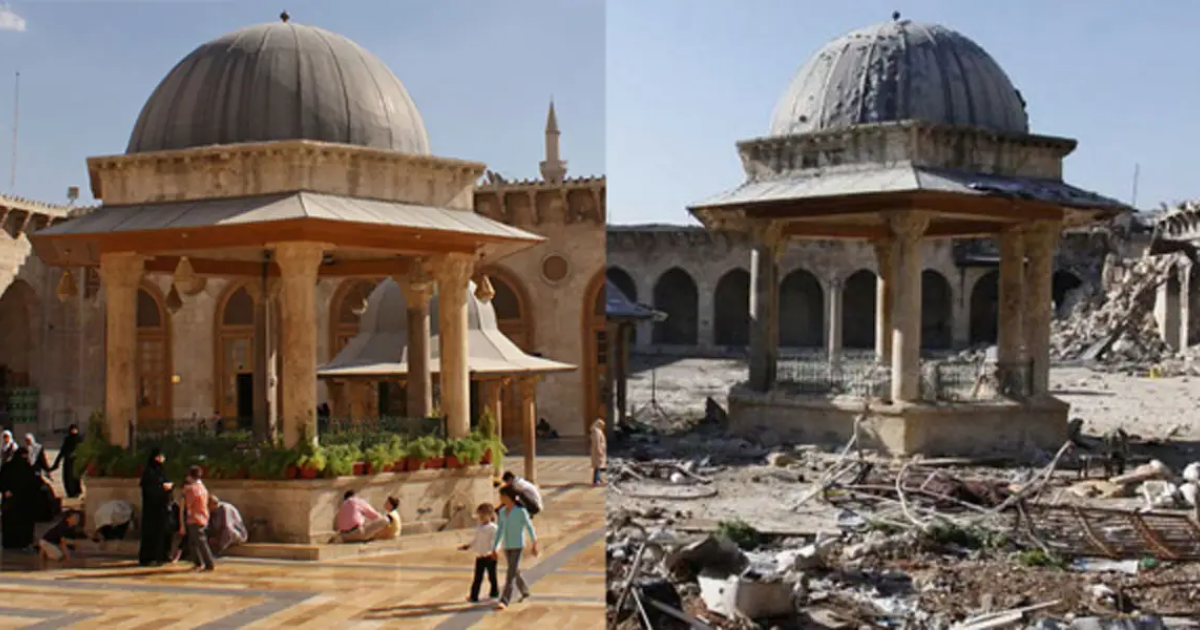
As a writer, the place I was born holds a special place in my heart. I often think about the Syria I grew up in, not as a political idea or a headline, but as a living memory. A place of early mornings filled with jasmine, afternoons shaped by conversations that lingered longer than the tea that accompanied them, and evenings where families gathered on balconies because community mattered more than privacy. When I left as a child, I carried those moments with me as proof of who we were before the darkness arrived.
Over the years, many readers have asked me to describe Syria before and after the war. They expect a simple contrast: before, peaceful; after, ruined. But reality never fits neatly into such categories. What happened to Syria cannot be explained only through ruins; it must also be understood through what continues to endure. A nation is not made of buildings alone. It is made of people, memory, and the stubborn will to survive even after every familiar shape has changed.
Before the War: A Country Built on Memory and Breath
Syria before 2011 was far from perfect, but it was intact. Its identity was held together by the cultural richness of cities like Damascus, Aleppo, Homs, and Hama, each with its own rhythm, each with its own history older than the wars that tried to erase it. Markets buzzed with laughter. Schools overflowed with children who believed the future would remain within reach.
What I remember most is the generosity. We lived with open doors and unspoken rules: you never let a guest leave hungry, and you never allowed suffering to go unnoticed. Even in political tension, social bonds were strong. That is the part the world rarely saw, the quiet dignity of ordinary Syrians.
After the War: A Country Rewritten by Loss
But when people speak of Syria after the war, they speak of absence, of cities reduced to shadows, families scattered across continents, and a generation robbed of the certainty we once took for granted. More than 14 million Syrians were displaced. Whole neighborhoods were erased. The familiar sound of morning in Damascus or Aleppo now carries an echo of what once was.
And yet, in speaking of destruction, we often forget an essential truth: war didn’t only break buildings; it fractured time. It divided Syria into “before” and “after,” and every Syrian now lives in both at once. The conflict took lives, but it also reshaped identity. Exile became an inheritance, and memory became a responsibility.
For many, Syria now exists in fragments, a street here, a childhood smell there, scattered across Europe, the Middle East, and the Americas. In those fragments, the country continues to live.
What Survived: The Invisible Syria
If the physical Syria was torn apart, the invisible Syria, the one made of memory, culture, and resilience, refused to die.
You see it in the artists who paint the colors of a home they can no longer touch.
You hear it in the writers who refuse to let their stories be replaced by propaganda.
You feel it in the refugees who rebuild their lives with a grace that should not be possible after such loss.
This is why I wrote Damascus Has Fallen, to document not just events, but the emotional and moral truth behind them. Not as an academic exercise, but as a witness to a nation breaking and reshaping itself at the same time.
The Syria That Lives Within Us
When we speak of Syria before and after the war, we must also speak of the Syria that continues to live inside millions of hearts. It is carried into every new city where Syrians build new lives. It is found in the language spoken at home, in dishes passed down through generations, and in the quiet determination to remain human despite everything.
Syria, before the war, taught us who we were.
Syria, after the war, challenges us to remember it.
If there is hope for the future, it lies in this truth: nations fall, but people rise. And when they rise with memory intact, what was broken can still be rebuilt, not out of nostalgia, but out of dignity.
Closing Reflection
Syria cannot be understood only through timelines or satellite images. To understand Syria before and after the war is to understand the resilience of its people, how they held onto humanity in moments where humanity seemed impossible.
The country may never return to what it once was. But the values that defined it, hospitality, loyalty, courage, and love, remain alive in its people, wherever they are in the world.
And as long as those remain, Syria is not lost. It is simply waiting for its chance to rise again.
