
Blogs
Why Cultural Heritage In Literature Matters More Than Ever

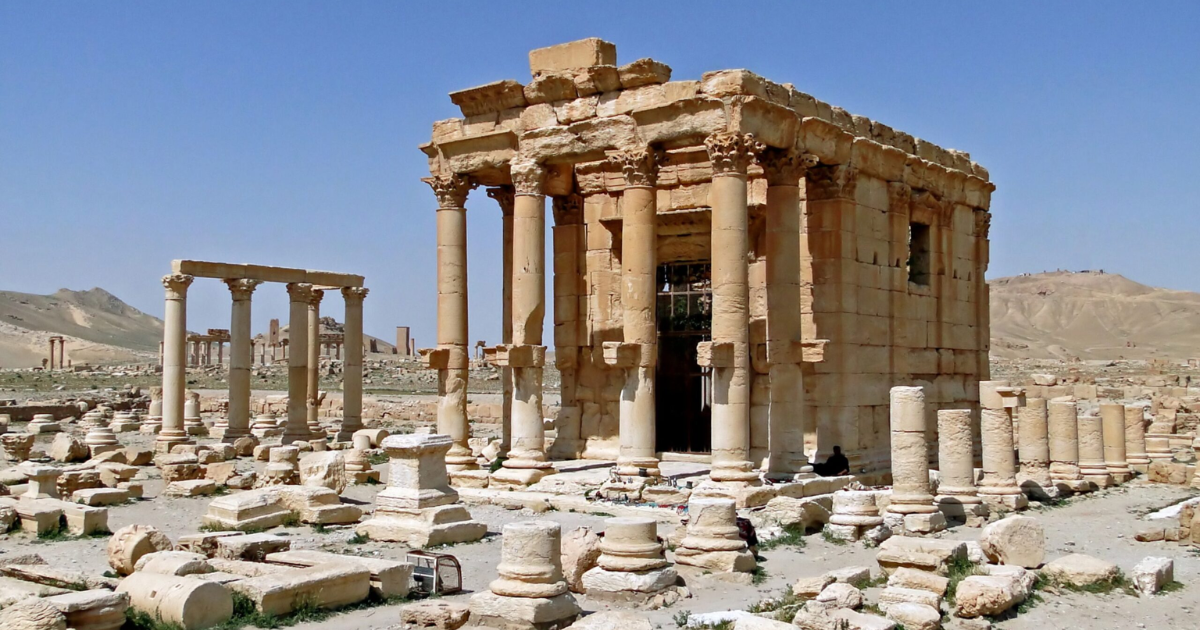
Every story is an act of preservation. When a writer sets a novel in a specific place, in a specific time, and fills it with the textures of a living culture, they are doing something that goes far beyond entertainment. They are building an archive. They are insisting that what happened here, and what these people believed, and how they loved and mourned and celebrated, should not be forgotten. That is what cultural heritage in literature means to me.
I came to this understanding through personal experience. Growing up Syrian, educated across Europe, and living in London, I carry within me layers of culture that do not always sit comfortably together. But literature has always been the space where those layers can breathe, where they can speak to one another, where they are allowed to matter.
Heritage Is Not Nostalgia
There is a risk, when discussing cultural heritage in literature, of confusing it with nostalgia. Nostalgia is a soft, simplified longing for an idealized past. Heritage is something harder and more honest. It carries a contradiction. It includes both what was beautiful and what was unjust. Good literature does not flatten heritage into something comfortable. It holds its full complexity.
When I wrote Palmyre pour toujours, I was not writing a lament. I was writing a demand. A demand that readers face the destruction of Palmyra not as a distant historical footnote but as a living wound. The ruins of that ancient Syrian city are a symbol of what happens when the world fails to protect its own shared story.
Syria as a Literary Archive
Syria is one of the oldest continuously inhabited places on earth. It carries within its borders languages, religions, architectural traditions, and artistic practices that stretch back thousands of years. When conflict tears through such a place, it is not only lives that are lost. It is memory. And when memory is lost, future generations lose the ability to understand where they came from.
This is precisely why cultural heritage in literature has such urgency today. Novels like Damascus Has Fallen do not simply dramatize crisis. They document a living world and the people who inhabited it, so that something of that world survives beyond the headlines.
The Responsibility of the Writer
I, Siwar Al Assad, have always felt that writing about a place you love carries a particular responsibility. You must be honest. You must resist the temptation to romanticize or to reduce. You must allow the culture you are representing to be complicated, contradictory, and fully human.
In Le Temps d’une Saison, I embedded the cultural life of 1920s Paris with care because I wanted readers to understand that era as a living world, not a film set. The cafes, the art, the politics, and the fashion of the period were not decoration. They were part of what was at stake.
How Literature Outlasts the Forces That Destroy Heritage
One of the most extraordinary things about cultural heritage in literature is that it endures. Buildings can be destroyed. Artefacts can be stolen. Languages can be suppressed. But a well-written novel that carries the spirit of a culture within it is very hard to erase.
When I compare Palmyra to cities like Carthage, Syracuse, and Timbuktu in my writing, I am making a larger argument: that the destruction of cultural heritage is not a new tragedy, but it is one that literature has always resisted. Stories are among the most resilient forms of memory that humanity has.
What You Can Do as a Reader
You do not need to be a historian or a scholar to engage with cultural heritage in literature. You simply need to read with openness, with curiosity, and with the willingness to let another world become real to you. That is an act of generosity. It is also, in the most genuine sense, an act of preservation.
Discover novels that honour cultural heritage and carry its memory forward. Explore the full collection here.
